


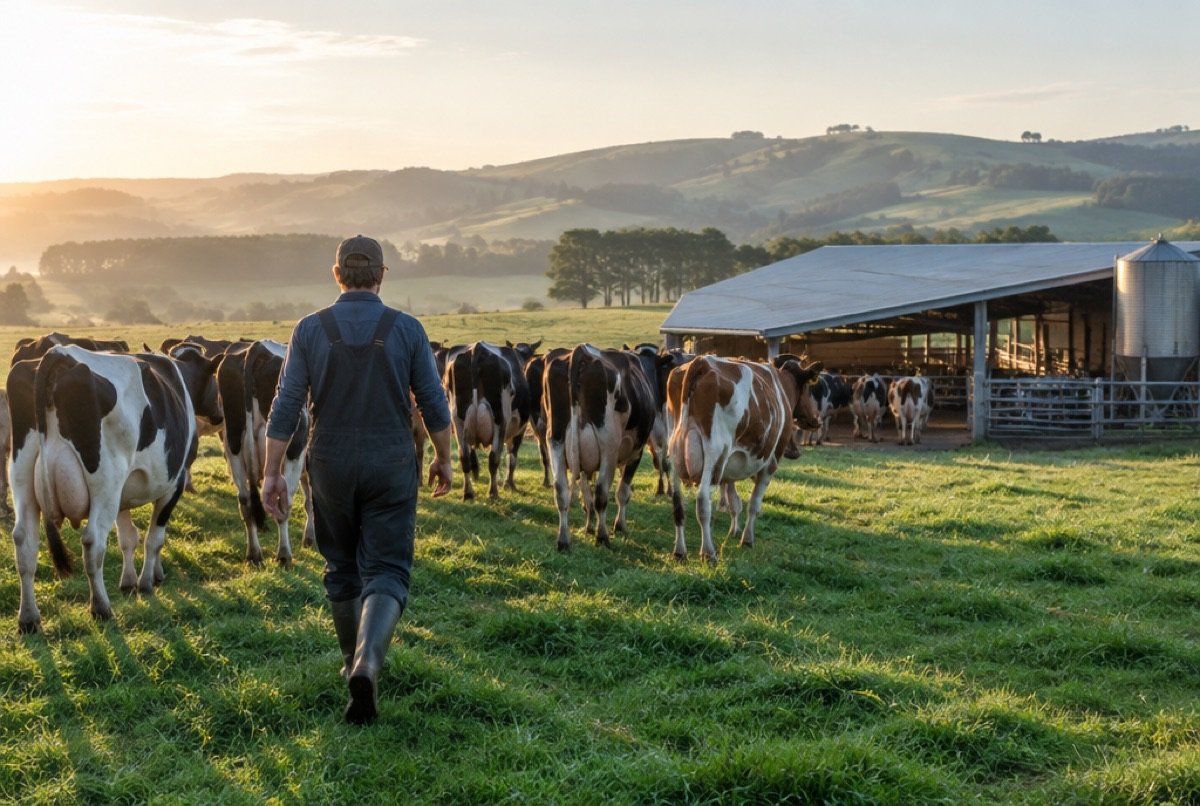
Milk is New Zealand’s largest export earner. Several million cows graze on grass across the country, and they are milked once or twice every day on thousands of family and corporate farms. Each farm needs a small, dependable team to bring cows in, run the milking shed and look after the land.
Many farms sit far from towns, and local workers are not always available. For this reason the dairy sector has employed migrant staff for many years, especially people who already have experience with cattle. Hiring is strongest ahead of 1 June, when the new farming season begins.
Farm workers in New Zealand are usually paid a yearly salary in New Zealand dollars, and it must never fall below the legal minimum wage for the hours worked. On-farm housing is very common, either free or at a set weekly rent, which lowers living costs considerably.
What follows is a plain account of the roles, indicative 2026 pay, eligibility, paperwork and the main work visa route. We are an information website and nothing more. We cannot offer farm work, and visa decisions belong only to Immigration New Zealand.
Dairy Farm Jobs · New Zealand 2026
🐄 Dairy Farm Work in New Zealand: Roles, Rosters, Pay and Visa Route
Farm assistant · Herd manager · Assistant manager roles in Waikato, Canterbury, Southland and Taranaki
See how to apply, step by step ↓
📋 Quick Job Summary
| Job Title | Dairy Farm Assistant / Herd Manager / Assistant Farm Manager |
| Industry | Dairy Farming & Agriculture |
| Location | New Zealand (Waikato, Canterbury, Southland, Otago, Taranaki, Manawatū) |
| Experience Required | Dairy or livestock experience strongly preferred; often required for a work visa |
| Contract Type | Full-time, permanent or fixed-term; some seasonal calving roles |
| Visa Sponsorship | Possible only with an accredited employer and an approved job; not guaranteed |
💰 Salary & Benefits
| Experience Level | Indicative Yearly Pay (gross) |
|---|---|
| Entry Level (farm assistant; 0-2 yrs) | NZ$52,000 – 62,000/year |
| Experienced (herd manager; 2-5 yrs) | NZ$62,000 – 78,000/year |
| Senior (assistant manager, farm manager; 5+ yrs) | NZ$78,000 – 100,000/year |
👔 Top Hiring Employers
- Family-owned dairy farms and farm owner-operators
- Sharemilkers and contract milkers who run herds for landowners
- Corporate and Māori-owned farming groups with several farms
- Large irrigated farms in Canterbury and North Otago
- Rural recruitment firms working for accredited farm employers
🛠️ A Typical Role Involves
- Bringing cows to the shed and milking them, morning and afternoon
- Washing down the milking plant and yard after each milking
- Shifting herds between paddocks and setting up fences
- Feeding calves and helping during calving
- Spotting lame or sick cows and reporting them
- Driving quad bikes and tractors for feeding and farm jobs
✅ Who Can Apply
- Adults who are physically fit and comfortable around large animals
- People with dairy, cattle or general farm experience
- A farming certificate or diploma is useful but not always essential
- Working English; some visa categories set a minimum test score
- A driving licence is expected on almost every farm
- Willingness to live in a rural area and start work before sunrise
📄 Documents Required
- Valid passport
- CV with details of herd size, shed type and tasks you handled
- Reference letters or contacts from farm employers
- Evidence of work experience or farming qualifications
- Signed employment agreement from an accredited employer
- Medical and police certificates, as requested for the visa
- Driving licence and, if asked, English test result
🎁 Employee Benefits
- On-Farm Housing (common)
- Four Weeks Paid Annual Leave
- Paid Public Holidays and Sick Leave
- Wet-Weather Gear Provided
- Training Through Industry Courses
- Milk or Meat Allowance on Some Farms
📍 Regional Demand
| Waikato | Very high (largest dairy region) |
| Canterbury | Very high (large irrigated herds) |
| Southland and Otago | High |
| Taranaki and Manawatū | High |
| Bay of Plenty, Northland and West Coast | Moderate |
📝 How to Apply, Step by Step
- Read the visa conditions first Look up the Accredited Employer Work Visa on the immigration website. Check the experience, English and health requirements that apply to farm roles.
- Write a farm-focused CV Give exact facts: number of cows milked, type of shed, machinery used and years in each job. Farmers value detail and honest references.
- Search the main job sites Look for “dairy farm assistant” and “herd manager” on the portals listed below. Many adverts appear from February to May for a June start.
- Check the employer is accredited Only accredited employers can support this visa. Ask the farmer directly and confirm it during the visa process.
- Interview and agreement Farmers normally interview by video call. Ask about the roster, hours, housing, rent and herd size, and get a written employment agreement.
- Apply for the visa After the employer’s job is approved, you receive a link to apply online. Travel only when the visa has been granted.
🧭 Life and Work on a New Zealand Dairy Farm
🗓️ The Farming Year
The season starts on 1 June, when many workers and whole herds move farms. Calving runs from about July to September and is the hardest period, with long days and little rest. Mating follows in spring. Late autumn is quieter, as cows are dried off before the next season.
⏰ Rosters and Early Starts
Milking often begins around 4.30 or 5 in the morning, with a second milking in the afternoon. Farms use rosters such as eleven days on and three off, or six on and two off. Employers must record hours so that your pay never drops below the minimum wage.
🏠 Housing on the Farm
Most farms supply a house or a room close to the shed. It may be part of the package or carry a weekly rent, and the amount must be written in your agreement. Living on site saves travel, but the nearest town and shops can be a long drive away.
🌧️ Weather and Physical Demands
Cows are outdoors all year, so you work in rain, frost, wind and mud, especially in the South Island. Expect lifting, walking long distances and standing on concrete in the shed. Good boots, thermal layers and waterproof gear matter as much as any tool.
🛂 The Accredited Employer Route
Most migrant dairy staff hold an Accredited Employer Work Visa. The farmer must be accredited and must show that the job was advertised locally first. The visa names your employer and role. Settings for lower-skilled roles, such as length of stay and English, have changed several times.
📈 Moving Up the Ladder
Dairy farming has a well-known progression. A farm assistant can become a herd manager, then an assistant manager and farm manager. Some go on to contract milking or sharemilking, where they earn a share of the milk income. Industry training courses support each stage.
❓ Frequently Asked Questions
Can I get a dairy job without experience?
People already in New Zealand sometimes do. From overseas it is hard, as employers and visa rules usually expect relevant farm experience.
Is accommodation free?
Sometimes. On other farms a weekly rent is charged or counted as part of the package. The figure must appear in your agreement.
How many hours will I work?
Often 45 to 55 hours a week, and more during calving. All hours must be recorded and paid at or above the minimum wage.
Do I need an English test?
It depends on the skill level of the role and current visa settings. Check the official visa page before you apply.
Can I bring my family?
Rules for partners and children depend on your pay and the skill level of your job. Read the official guidance for your case.
Does this website arrange the job or visa?
No. We only provide information. Farmers hire their own staff, and Immigration New Zealand decides every visa.
🔗 Official Sources and Job Portals
- Immigration New Zealand →
- Employment New Zealand →
- Ministry for Primary Industries →
- SEEK New Zealand →
- Trade Me Jobs →
✍️ Conclusion
Dairy farming in New Zealand rewards people who like animals, early mornings and outdoor work. Salaries are fair, housing is often included and there is a real ladder to management. The lifestyle is isolated and the visa rules need careful reading, so deal only with accredited employers and official websites.
